






 Cooled Radiofrequency Ablation (RFA)
 Tined Radiofrequency Ablation (RFA)
 Conventional Radiofrequency Ablation (RFA)
 RFA Equipment & Accessories
 Needles, Kits, and Trays
 Elastomeric Pain Pumps and Kits
 Needles, Kits, and Trays (Incisional and PNB)
 Cryo Compression Control Unit Systems
 Cryo Compression Sleeves and Wraps
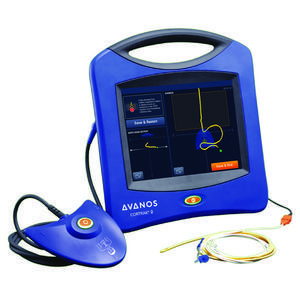 Feeding Tube Placement Device
 Feeding Tube Retention Systems
 Declogging and Decompression
 Feeding Tubes and Accessories
 Introducer Kits and Accessories
 Feeding Tube Extension Sets and Adapters
 Enteral Medication Preparation & Delivery
 Feeding Accessories
 Feeding Pumps
 Feeding Syringes
 Feeding Tubes and Extension Sets
 Lumbar Puncture Trays and Needles
 Oral Care/Colostrum Kits and Components
 Urinary Catheters & Kits
By Kerr Holbrook, Avanos Senior Vice President and Chief Commercial Officer
This year, Avanos launched a three-year plan to reimagine our business, prioritizing product innovation, supply chain effectiveness, and commercial and financial optimization – all with the goal of furthering our vision of getting patients back to what matters.
This post is part of a series by Avanos senior leaders discussing the company’s transformation.

As we navigate the increasing pace of change in our industry, the power to reimagine our business cannot lie solely in the hands of senior leaders. Instead, we must empower and leverage the collective vision of our employees, as that is the secret to sustaining business transformation and energizing our teams.
According to American psychologist Frederick Herzberg, one of the most powerful motivators in our careers is the opportunity to learn, grow in responsibilities, contribute to others, and be recognized for achievements. Empowering employees can amplify each of these.
In my experience, employee empowerment can’t be just a catchphrase; it must be a strategic and cultural imperative to drive real business transformation. When teams understand what needs to be done and are empowered to discover how to get it done by a leader who has their back, they feel more ownership and accountability for business results. Further, they don’t just show up to work; they bring their passion, creativity, and dedication to the table, and are more willing to take appropriate business risks. McKinsey & Company research demonstrates that empowering corporate environments are nearly four times more likely to make fast, good decisions and outperform their industry peers.
Empowerment is a great employee development tool as well. When teams feel empowered, self-doubt, fear of failure and hesitation fade away, unlocking the team’s potential. With appropriate tools and decision guardrails, empowered individuals can experiment with ideas and explore their capabilities, improving their management acumen. And this freedom translates to increased motivation, higher job satisfaction, and an improved talent pipeline.
Empowerment in Practice
Clearly, empowerment is critical for high-performing teams. If you’re seeking to improve the practice of empowering your team, I’ve identified a few powerful, yet simple, steps:
- Get to know your team. Regular 1:1s with direct reports will help you understand what makes them tick, including what motivates and frustrates them and how they want to grow in the organization.
- Constantly assess skills and abilities. Empowerment is an impactful way to help develop and grow your team. Who can take on more? Where can you delegate important tasks and responsibilities? What skill gaps are there on the team?
- Be hands-on but not directive. Set regular check-ins. Provide mission clarity and ensure appropriate tools are available. Set expectations around outcomes but give options and ask questions instead of suggesting a specific course of action.
Transformation Doesn’t Happen Overnight
Transformation doesn’t happen overnight, and it certainly doesn’t happen in isolation. Employee empowerment is a critical catalyst that works in tandem with other elements, such as leadership vision, clear communication, and adaptability. As leaders, we must create the conditions for empowerment to flourish, nurturing an environment where employees feel supported and are inspired to think critically and do their best work.
In a world characterized by rapid technological advancements and shifting market dynamics, companies must be agile and responsive. This requires an empowered workforce that isn’t afraid to challenge the status quo, innovate fearlessly, and adapt readily. By empowering employees, we harness their energy, creativity, and dedication, and this will propel us into new territories and ensure that the business transformation we envision is not just a dream, but a tangible reality.
